Transformative Cities

Cities shape us back.

Transformative Cities

Cities shape us back.

A city can make driving seem inevitable, exclusion look like preference, and everyday exhaustion feel like a private problem.

It can also do the opposite. Having somewhere to go becomes having people who expect you.

We design streets, build housing and write the rules for public space. We are also deciding whether people can get around alone, whether they run into each other, whether anyone notices when they stop coming.

Over years, what a place makes ordinary is what people come to expect – from the city, from each other, from themselves.

This is the city’s Cognitive-Behavioural Infrastructure (CBI) at work.

What are we really shaping when we shape a city?

Six sessions with the people shaping cities – around the places they know and what those places set in motion.

Curated and led by Josephine Yilan Liu, Transformative Cities × Urban Future.
+ 01 The Physics of Cities

Why does the same action feel obvious in one place, awkward in another and almost unthinkable somewhere else?

In one schoolyard, girls kept to the edges while football occupied the centre. Then, on a ball-free day, a girl sat down in the middle.

Suddenly, she prefers the edge stopped being an explanation.

What looks like preference often has a floor plan.

What is the city already making easy — and for whom?

+ 02 Streets That Make the Future

A crossing can decide whether a child gets around alone.

Traffic speed can decide whether a parent lets go of a hand.

A bench can be what lets someone at eighty stay out long enough to remain part of public life.

Streets don’t only organise movement. They organise the lives that grow around them.

What are we really shaping when we shape a street?

+ 03 How Places Come to Matter

Loneliness, mistrust and social disconnection are becoming major challenges for cities. But trust, belonging, attachment and meaning cannot simply be delivered.

A swimming pool can simply be somewhere to swim — or the place where childhood happened.People come back. They take something on. They start to be counted on. One day someone notices when they are missing.

Not just present.

Known and needed

Repeated encounter, contribution and responsibility can make people not simply present, but known and needed. Places become meaningful as life accumulates in them.

When does somewhere we use become somewhere that matters to us?

+ 04 When Does a Pattern Become Normal?

A child grows up independent — or from the back seat of a car. A street that was once fought over becomes ordinary to a generation that never saw it any other way. A neighbourhood accumulates forty years of routines, relationships and institutions.

Opening day is not when the consequences are finished. It is when many of them begin.

By the time something looks like culture, preference or simply how things are here, the city may have been rehearsing it for years.

What became easier? What stopped requiring thought? What new dependency appeared? What do people now expect that they once did not?

How can we see what is forming while there is still time to change it?

+ 05 Shaping the Slope

The pilot works. Then nothing that made it work reaches an ordinary budget, a standard, a rule or a maintenance schedule — and the next project fights the same battle from the start.

If every project has to win the same exception, the problem is no longer the project.

The old normal has infrastructure.

What has to change so the new way stops travelling uphill?

+ 06 What Should a Place Help Us Become?

We don’t only inherit streets and buildings.

We inherit what they made ordinary.

Some conditions make independence easy to practise, strangers easier to know, taking part a normal part of the week.

Others make dependence, vigilance or staying home the sensible response.
There is no single ideal life to design for. Where encounter competes with privacy, or shared use with individual control, someone still has to decide what gets protected, enabled and given priority.

These are public choices, even when the decision arrives labelled as engineering.

Whose possibilities grow, whose shrink — and who gets to decide, on what basis?

+ Masterclass: Cities as Cognitive-Behavioural Infrastructure

A square can be open to everyone and still make staying feel out of place.

A street can prioritise pedestrians on paper while everything about it says drive.

A shared room can count as an amenity without ever becoming part of anyone’s life.

Plans divide cities into disciplines. Everyday life does not.

Through real urban situations, the masterclass reveals how design, rules, routines and other people’s actions combine: what they make possible, what they make costly, and what needs to change or be protected.

What is this situation making true in practice?

Programme in development. Details to follow.

ABOUT TRANSFORMATIVE CITIES

Places shape behaviour, belief and becoming.

Transformative Cities makes that shaping visible — and workable — through Cognitive-Behavioural Infrastructure (CBI): the largely unseen conditions beneath the visible project we plan, build and manage.

Most of urbanism is about what to build. TC asks what it builds in us — and how to work with that while there is still time to change it.

ABOUT THE CURATOR

Josephine Yilan Liu is the founder of Transformative Cities and co-founder of Urban Future.

An architect, she turned to cognitive science because urban practice could describe what it built far better than what those places were doing back to people.

She curates and leads the track to bring research and first-hand urban experience into a shared understanding of what city-making is really shaping — and what it means to take responsibility for it.

HAVE A CASE THAT DOESN’T FIT THE BRIEF?

Have you seen a place change people’s lives in ways nobody planned?

Or watched something valuable disappear because a decision looked perfectly sensible on paper?

Bring the case. Bring the evidence. Bring the contradiction.

We want to hear about the places you know.

About Urban Future

The Better-Cities Event

About Urban Future

The Better-Cities Event

April 6-9, 2027

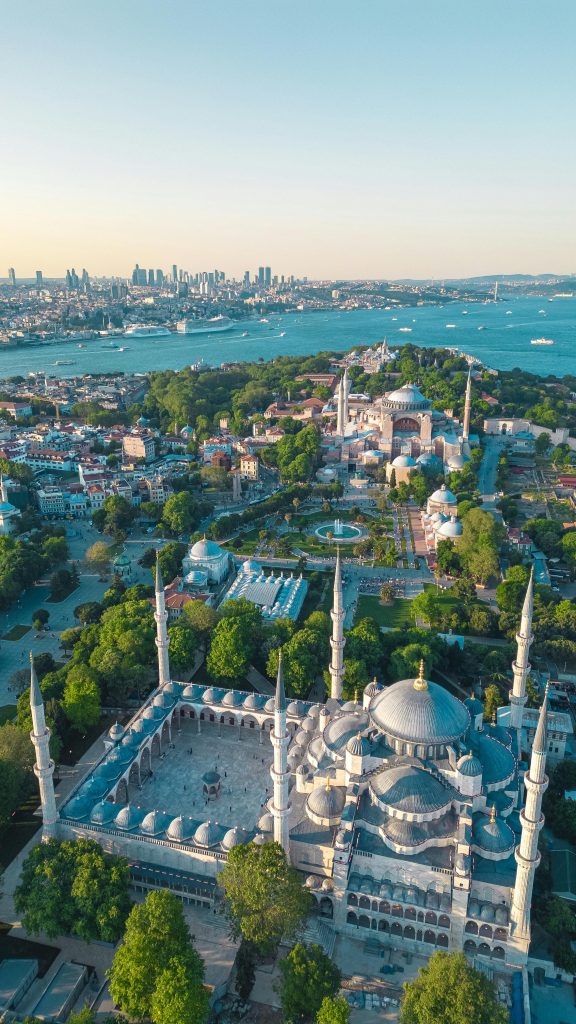
Istanbul, Türkiye

Flavour Programme